Perfume Layering Tips: A Beginner’s Guide (With a Mixing Chart)
Last updated: October 2026
This post contains affiliate links. As an Amazon Associate, I earn from qualifying purchases.
Quick Answer: The most important perfume layering tip is to apply the heavier scent first and the lighter one on top, using about two sprays of the base to one spray of the top scent. A warm vanilla base like Victoria’s Secret Bare Vanilla Fragrance Mist pairs with almost any woody, spicy, or fruity perfume, which makes it the easiest starting point for beginners.
Perfume layering sounds like something only fragrance collectors do, but it is the simplest way to get more out of the bottles already on your dresser. With a few perfume layering tips, two ordinary scents turn into a combination nobody else wears.
This guide is for beginners who want clear rules instead of guesswork. You’ll learn which scent families mix well, the exact order to apply them, how to test a combo before you commit, and the mistakes that turn a nice pairing into a headache.
What Is Perfume Layering?
Perfume layering means wearing two or more fragrances at the same time so they blend into a new scent. You can layer two perfumes, a body mist with a perfume, or a scented lotion with a spray.
Every fragrance moves through three stages. Top notes greet you in the first few minutes, heart notes show up after 15 to 30 minutes, and base notes linger for hours. Good layering matches or balances those stages across two scents, so the combination smells intentional from the first spray to the last trace on your skin.
The Perfume Layering Chart: Which Scent Families Mix Well
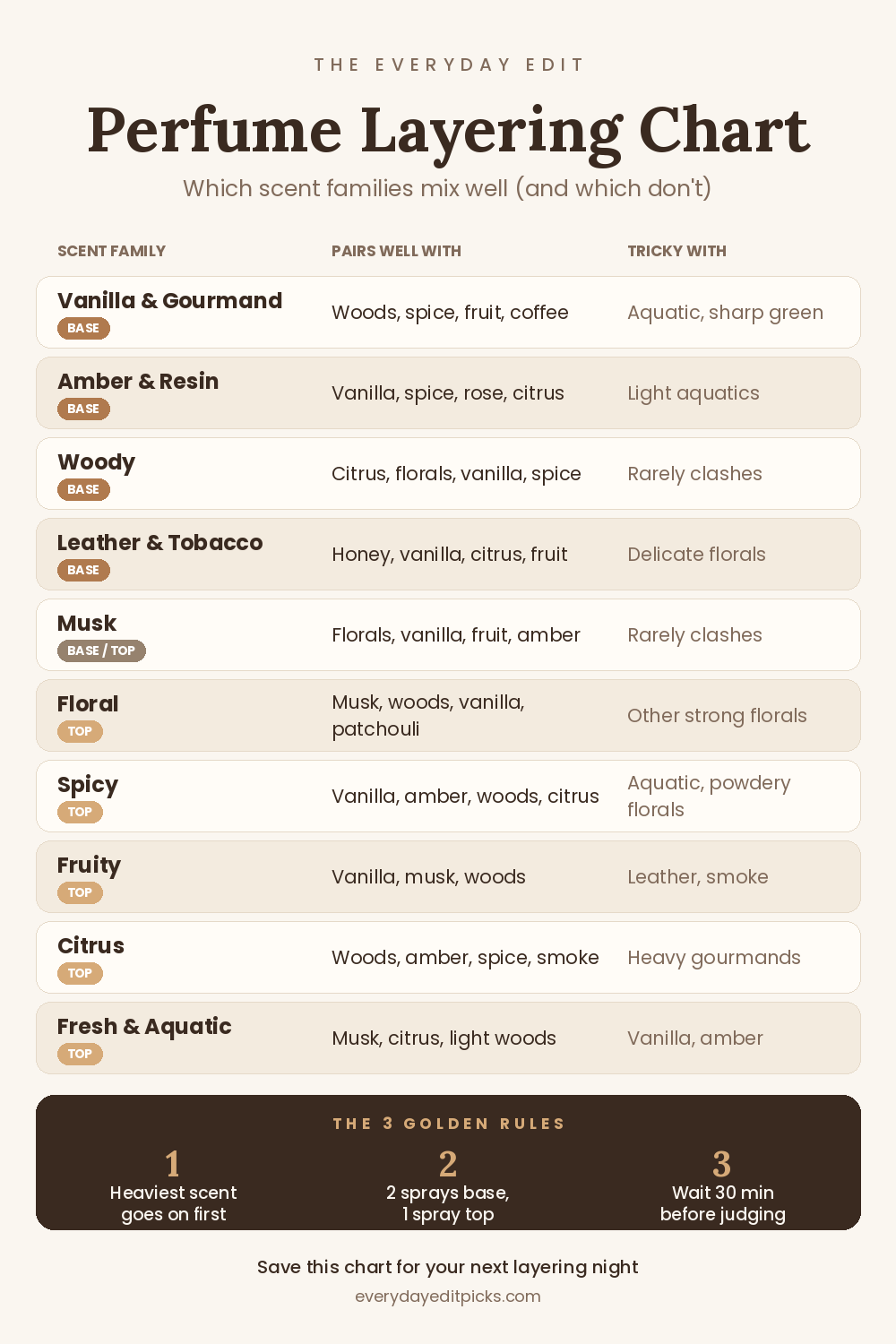
Use this chart as your cheat sheet. Find the family of the scent you already own, check whether it works best as a base or a top layer, and pick a partner from the “pairs well with” column.
| Scent family | Wear it as | Pairs well with | Tricky with |
|---|---|---|---|
| Vanilla & gourmand | Base | Woods, spice, fruit, coffee, musk | Aquatic, sharp green |
| Amber & resin | Base | Vanilla, spice, rose, citrus | Light aquatics |
| Woody (sandalwood, cedar) | Base | Citrus, florals, vanilla, spice | Rarely clashes |
| Leather, tobacco & smoke | Base | Honey, vanilla, citrus, fruit | Delicate florals, aquatics |
| Musk | Base or top | Florals, vanilla, fruit, amber | Rarely clashes |
| Floral (rose, jasmine, peony) | Heart or top | Musk, woods, vanilla, patchouli | Other strong florals |
| Spicy (cinnamon, cardamom, pepper) | Top | Vanilla, amber, woods, citrus | Aquatic, powdery florals |
| Fruity (pear, berries, apple) | Top | Vanilla, musk, woods | Heavy leather, smoke |
| Citrus (bergamot, orange) | Top | Woods, amber, spice, smoke | Heavy gourmands |
| Fresh & aquatic | Top | Musk, citrus, light woods | Vanilla, amber, gourmands |
Two families on the chart rarely clash with anything: woods and musk. If you feel unsure, build your first combo around one of them.
Perfume Layering Tips: How to Layer Perfume Step by Step
Step 1: Start With Unscented, Moisturized Skin
Fragrance clings to moisture and fades fast on dry skin. Apply a fragrance-free moisturizer such as CeraVe Moisturizing Cream to your wrists, neck, and chest a few minutes before you spray. It gives both scents something to hold onto without adding a third scent to the mix.
Step 2: Choose Your Anchor Scent
Your anchor is the heavier fragrance that sets the tone and lasts the longest. Pick something from the base families in the chart: vanilla, amber, woods, or leather. If you only own light scents, a single vanilla or musk body mist can anchor nearly everything else on your shelf.
Step 3: Pick a Partner That Shares or Balances a Note
The easiest combinations share one note. A vanilla anchor and a perfume with a hint of vanilla in its base blend almost seamlessly. The second approach is contrast: bright citrus lifts a heavy amber, and clean musk softens a loud spicy scent.
Check the notes list on the box or the brand’s website before you start. Choose either a shared note or a clear contrast, never two random scents you simply like on their own.
Step 4: Apply the Heavier Scent First, Then Layer Lightly
Spray two pumps of your anchor on your pulse points and let it dry for about a minute. Then add one spray of the lighter scent in the same spots. The two-to-one ratio keeps the combination from turning muddy. If one scent overpowers the other, adjust the ratio next time instead of adding more sprays today.
Step 5: Test the Combination for a Full Day
A combination that smells great in the first five minutes can turn sour two hours later. Wear it for a full day before you commit, and pay attention to the dry-down in the afternoon. Keep a quick note on your phone with the two scents, the ratio, and how it smelled after four hours, so you can repeat the combos that work.
8 Perfume Layering Tips That Make Your Combos Last
1. Test on Skin, Not on Paper
Paper strips only show you the top notes. Your skin chemistry changes how a fragrance develops, so a combination can smell completely different on you than on a blotter.
2. Start With What You Already Own
You don’t need new bottles to practice. Line up your perfumes, sort them into base and top scents using the chart, and try the most obvious pairings first.
3. Keep One Versatile Base on Hand
A simple vanilla or musk scent works as a base for most of the chart. Once you own one reliable anchor, every other fragrance in your collection gains a second life.
4. Use Different Spots for a Subtler Blend
Spray your anchor on your chest and the lighter scent on your wrists. The two meet in the air around you instead of on the same patch of skin, which creates a softer, more natural combination.
5. Match Your Combo to the Season
Warm families like vanilla, amber, and spice feel right in cold weather, while citrus and aquatic scents shine in summer. For ready-made autumn pairings, try our 12 fall perfume layering combinations.
6. Layer Products From the Same Line
Many brands sell matching lotions, body washes, and mists. Using a lotion and a mist from the same scent line gives you a built-in base layer that you can top with a different perfume.
7. Scent Your Hair the Gentle Way
Hair holds fragrance for hours, but alcohol-based perfume can dry it out. Spray the top scent onto your hairbrush instead of directly onto your hair for a soft trail that lasts all day.
8. Go Lighter at Work
Two layered scents project more than one. For offices and small spaces, drop to one spray of each, or keep the second scent on your wrists only.
Common Perfume Layering Mistakes to Avoid
Using too many scents at once. Two is the sweet spot. A third scent only works if it is very light, and anything beyond that usually turns into a blur.
Pairing two loud statement scents. A bold oud and a heavy tuberose will fight for attention. Let one scent lead and let the other support it.
Rubbing your wrists together. The friction makes the top notes fade faster and flattens the opening of both scents. Spray, then leave your skin alone.
Judging the combo too soon. The first minute smells mostly of alcohol and top notes. Give every new pairing at least 30 minutes before you decide.
Forgetting about nose fatigue. After an hour, you stop noticing your own fragrance even when everyone around you still smells it. Resist the urge to respray just because you can’t smell it anymore.
Three Beginner Combos to Try This Week
Put the steps and the chart into practice with three combinations that almost always work, no matter which brands you own.
Vanilla + citrus. Two sprays of any vanilla scent, one spray of orange or bergamot on top. The citrus keeps the vanilla from feeling heavy, and the result smells like a fresh-baked orange cake. It works for daytime all year round.
Sandalwood + rose. A creamy wood base turns a simple rose into something warm and grown-up. It suits dinners, dates, and any evening when you want to feel polished.
Amber + clean musk. Amber brings warmth and depth, while musk makes it smell like soft skin instead of a candle shop. It is the safest combo on this list and a great first experiment.
Tools and Scents That Make Layering Easier
You can layer with anything you already own, but a few affordable pieces make the process much easier for beginners.
An easy vanilla base: Victoria’s Secret Bare Vanilla Fragrance Mist works as an anchor for woody, spicy, and fruity perfumes, and its light concentration makes mistakes easy to fix.
A rich evening anchor: Lattafa Asad brings peppery spice over a warm vanilla and amber base. One spray under a clean musk or citrus scent gives you a warm evening combo that lasts for hours.
A sweet partner for woody bases: Sol de Janeiro Cheirosa 62 Perfume Mist adds pistachio and salted caramel on top of sandalwood or cedar.
A fragrance-free prep step: CeraVe Moisturizing Cream helps every combination last longer without adding its own scent.
Want to build a small layering kit that works all year? Our guide to the best perfumes for layering in 2026 compares the top bases and partners side by side.
Perfume Layering Tips FAQ
What is the golden rule of perfume layering?
Apply the heavier scent first and the lighter scent on top. Base families like vanilla, amber, woods, and leather anchor the combination, while citrus, fruit, florals, and musk sit on top and add brightness.
Should you spray layered perfumes in the same spot or in different spots?
Both work, and they create different effects. Spraying in the same spot blends the two scents into one new fragrance. Spraying the anchor on your chest and the lighter scent on your wrists creates a subtler combination that shifts as you move.
Can you layer two strong perfumes together?
You can, but it rarely works on the first try. Let one perfume lead with two sprays and use only one light spray of the second, or the two will compete instead of blending.
How long should you wait between sprays when layering?
Wait about a minute for the first scent to dry before you add the second. The pause keeps the alcohol from mixing both top notes into a blur and gives you a cleaner result.
Does layering make perfume last longer?
Usually, yes. A heavy base scent and a fragrance-free lotion underneath both slow down evaporation, so a layered combination often outlasts either perfume worn alone.
Can you layer a body mist with a perfume?
Yes, and it is one of the cheapest ways to start. Spray the body mist first as your base, then add one spray of perfume on top to lock the combination in and help it last.
Which scents are hardest to layer?
Fresh aquatic scents and heavy gourmands tend to clash, and two strong florals often fight for attention. If you want to combine them, keep the ratio very uneven and test on skin first.
Is perfume layering worth it on a budget?
Yes. Layering lets you turn two inexpensive scents into something that smells richer and more personal than either one alone. Affordable dupes work especially well as anchors, and our honest take on whether perfume dupes are worth it explains what you get for the price.
How do you know if a perfume combination works?
Wear it for a full day and pay attention to the dry-down after three or four hours. If it still smells balanced in the afternoon and nobody reaches for the window, you have a keeper.
Do perfume layering tips work for men’s fragrances too?
Yes. The same rules apply to any fragrance: heavier scents go on first, lighter ones on top, and a two-to-one spray ratio keeps the blend balanced.
Your Next Step
Pick one anchor from your dresser tonight, choose a partner from the chart, and wear the combination tomorrow. Check how it smells in the afternoon and write down what worked. For ready-made pairings, start with our 15 perfume layering combos that smell expensive, or try our vanilla perfume layering combos if you already own a vanilla scent.